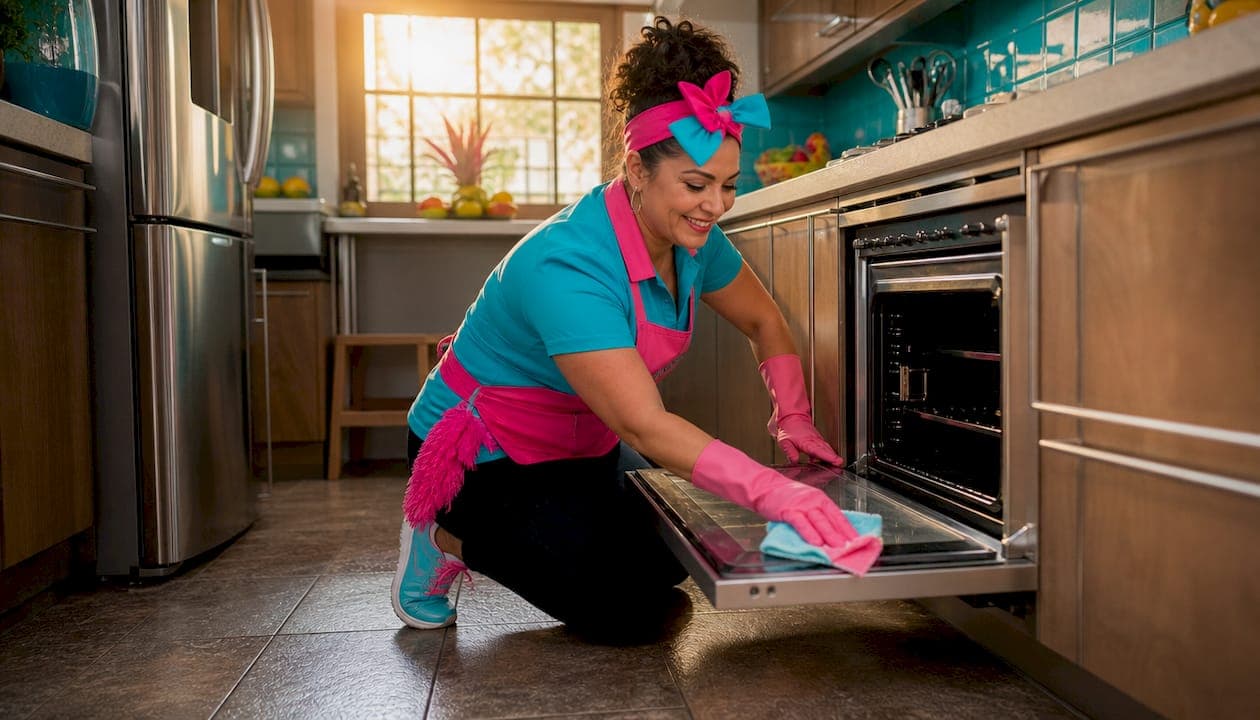
Kitchen deep cleaning is defined as the systematic removal of grease, bacteria, and hidden buildup from appliance interiors, cabinetry, fixtures, and surfaces that routine wiping never reaches. The types of kitchen deep cleaning tasks go well beyond surface maintenance. They target carbonized oven grease, refrigerator gaskets, range hood filters, and drain odors. A standard deep clean takes 3–6 hours and is recommended 1–2 times per year. That time investment pays off in better hygiene, longer-lasting appliances, and a kitchen that genuinely feels clean, not just looks it.
1. Types of kitchen deep cleaning tasks: appliance interiors
Appliance deep cleaning is the highest-impact category in any kitchen cleaning checklist. Ovens, refrigerators, dishwashers, microwaves, and range hoods all accumulate grease and bacteria that surface wiping cannot address.
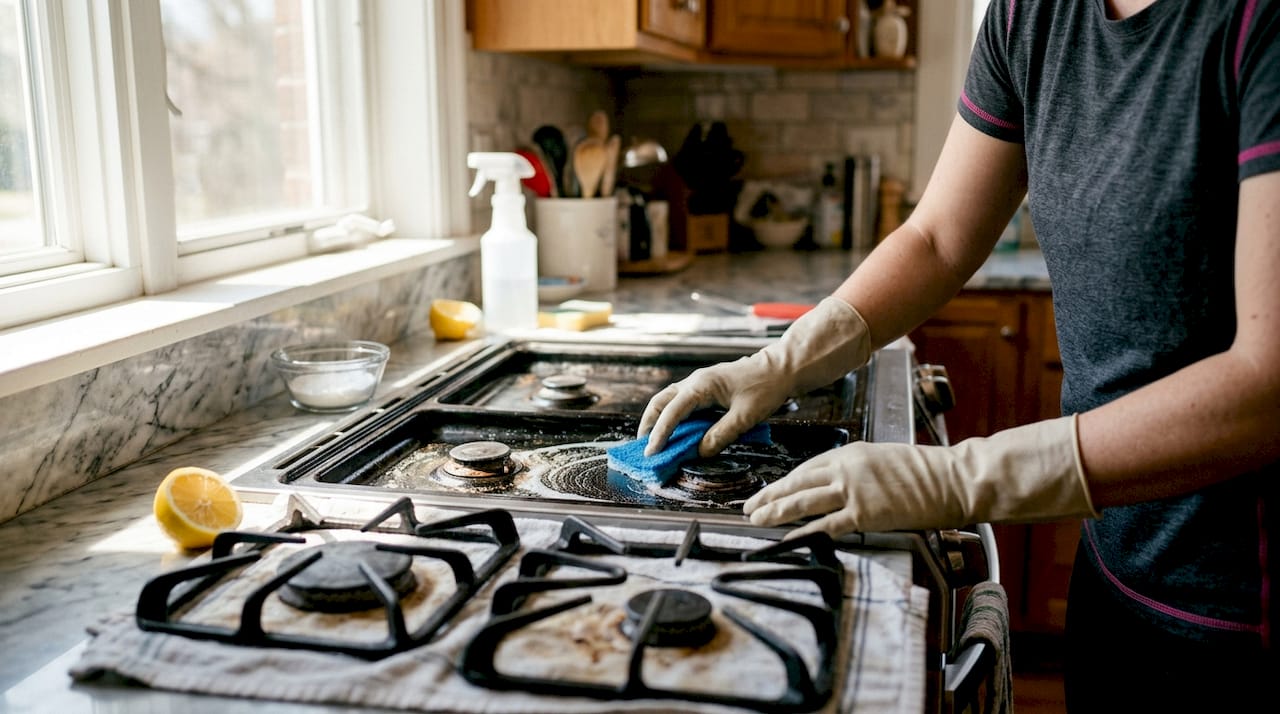
Oven
A baking soda paste at a 2:1 ratio of baking soda to water, left for at least 12 hours, breaks down carbonized grease without harsh chemicals. That dwell time is the key. Scrubbing immediately after applying cleaner wastes effort because the grease has not yet loosened.
Refrigerator
Remove all shelves and drawers. Wipe the interior walls with a mild solution, then sanitize door gaskets where mold hides. Vacuuming condenser coils improves compressor efficiency and prevents premature failure. A full refrigerator deep clean is recommended quarterly.
Dishwasher, microwave, and range hood
- Dishwasher: Remove and rinse the filter monthly. Clean spray arms with a toothpick to clear blocked holes. Descale monthly with a dishwasher-safe descaling tablet.
- Microwave: Wipe the interior and exterior weekly. A bowl of water with lemon juice microwaved for two minutes loosens splatter and cuts odors.
- Range hood: Clean the filter monthly by soaking it in hot water with dish soap. Grease saturation reduces ventilation efficiency and raises fire risk.
Pro Tip: Set a recurring monthly phone reminder for dishwasher and range hood filter maintenance. These two tasks take under 15 minutes each and prevent the most common kitchen fire hazards.
2. Cabinet and drawer deep cleaning
Cabinets collect two types of grime: sticky airborne grease on exterior fronts and top surfaces, and crumbs plus spills inside drawers and shelves. Both need attention during a thorough deep cleaning kitchen session.
Start by emptying every drawer and cabinet shelf completely. Shake out crumbs, then wipe interiors with a damp microfiber cloth and a mild all-purpose cleaner. Pay attention to corners where debris packs in.
Cabinet fronts and tops are grease magnets. Cooking vapor rises and coats surfaces in a thin, sticky film that attracts dust. A degreaser with a 5–15 minute dwell time lets the product break down oxidized grease before you wipe. Scrubbing without dwell time just moves the grease around.
Key cautions for cabinet cleaning:
- Painted or laminate finishes: Use a pH-neutral cleaner. Harsh degreasers strip paint and cloud laminate.
- Wood cabinets: Avoid soaking. Use a barely damp cloth and dry immediately to prevent warping.
- Top surfaces: These are often forgotten. Grease and dust combine into a thick, sticky layer. A plastic scraper removes the bulk before you apply cleaner.
- Hardware: Remove knobs and pulls if possible. Soak in warm soapy water and dry before reinstalling.
Pro Tip: For seasonal maintenance between deep cleans, wipe cabinet fronts with a damp microfiber cloth every two weeks. That habit cuts your deep clean time in half.
3. Countertop, backsplash, sink, and fixture cleaning
Food-contact surfaces carry the highest bacterial load in any kitchen. Countertops, backsplashes, sinks, and faucets need both degreasing and sanitizing during a full deep clean.
Countertops and backsplash grout lines trap grease and food particles that a daily wipe misses. Apply a degreaser and let it sit for the full dwell period before scrubbing. Use a stiff-bristled grout brush on tile backsplash lines. Rinse thoroughly to remove residue.
Surface-specific cleaning steps:
- Granite and marble countertops: Never use vinegar. Acidic cleaners etch natural stone and cause permanent dullness. Use a pH-neutral stone cleaner instead.
- Laminate and quartz countertops: Baking soda paste works well for stain removal. Rinse completely to avoid residue buildup.
- Sink: Sprinkle baking soda, scrub with a soft brush, then rinse. Baking soda and vinegar poured down the drain cut through grease and eliminate odors effectively.
- Faucets and handles: Mineral deposits build up around the base. Wrap a vinegar-soaked paper towel around the faucet base for 20 minutes, then scrub with an old toothbrush.
- Trash can and recycling bin: Empty completely, spray the interior with a disinfectant, let it sit for five minutes, then rinse and air dry. Odor control starts here.
A clean space is a reflection of respect, for yourself and for everyone who shares your home. Sanitizing food-contact surfaces is not optional maintenance. It is a health practice.
4. Floor and hidden maintenance zones
Floors and hidden areas are the final step in any deep cleaning kitchen guide, and they are the most commonly skipped. Grease and crumbs accumulate under appliances, behind stoves, and inside ventilation filters for months without anyone noticing.
The top-down, dry-before-wet sequence is the professional standard. Clean upper surfaces first so debris falls to the floor. Sweep and vacuum before mopping so you are not pushing wet grime across a dirty floor. Skipping this order means re-soiling surfaces you already cleaned.
Hidden maintenance areas to address:
- Under appliances: Pull the refrigerator and stove out from the wall. Sweep accumulated grease, crumbs, and dust. This zone is a pest magnet and a fire risk.
- Behind the stove: Grease splatters coat the wall behind the burners. Wipe with a degreaser and a microfiber cloth.
- Refrigerator condenser coils: Located at the back or bottom of the unit. Vacuum with a brush attachment. Neglecting condenser coils leads to reduced appliance performance and a shorter lifespan.
- Range hood exterior and ductwork: Wipe the exterior housing monthly. Ductwork cleaning is a once-a-year task for heavy-use kitchens.
- Kitchen floor: Mop last, using a clean mop head and a pH-appropriate floor cleaner matched to your floor type.
Pro Tip: Slide a flat furniture dolly under your refrigerator before pulling it out. It protects your floor and makes the job a one-person task instead of a two-person struggle.
Key takeaways
Effective kitchen deep cleaning requires addressing appliances, cabinetry, surfaces, and hidden zones in a structured sequence to protect health, prevent fire hazards, and extend appliance life.
| Point | Details |
|---|---|
| Appliance interiors first | Clean ovens, refrigerators, and range hoods on a monthly to quarterly schedule to prevent grease buildup and fire risk. |
| Dwell time is non-negotiable | Let degreasers and baking soda paste sit for 5–15 minutes before scrubbing to break down oxidized grease effectively. |
| Surface compatibility matters | Never use vinegar on natural stone. Always test cleaners on a small area before applying to full surfaces. |
| Top-down, dry-before-wet | Clean upper surfaces before floors and sweep before mopping to avoid re-soiling already-cleaned areas. |
| Hidden zones extend appliance life | Vacuuming condenser coils and cleaning range hood filters prevents mechanical failure and reduces energy use. |
What I have learned from years of deep cleaning kitchens
The biggest mistake I see homeowners make is treating a deep clean like a speed round. They spray, wipe immediately, and wonder why the grease is still there. Dwell time is everything. The chemistry needs time to work. Rushing it means you are doing twice the physical labor for half the result.
The second mistake is starting with the floors. Every professional cleaner I respect follows the top-down principle without exception. You dislodge debris from upper surfaces, and it falls. If your floor is already mopped, you just created more work for yourself.
I also see a lot of damage from well-meaning homeowners using vinegar on granite or marble. Natural stone is porous and acid-sensitive. One application of undiluted vinegar can etch the surface permanently. The fix costs hundreds of dollars. The prevention costs nothing: just use the right cleaner for the right surface.
My honest advice is to pace yourself. A full kitchen deep clean done well takes 3–6 hours. Break it into two sessions if you need to. Tackle the oven and refrigerator on one day, then surfaces and floors on another. The result is a kitchen that feels genuinely cared for, not just wiped down.
You can find more practical guidance on the Candiglitzllc cleaning blog if you want to go deeper on specific techniques.
— Tanna
When a professional deep clean makes sense
A thorough kitchen deep clean done right takes time, the correct products, and a clear sequence. Not every homeowner has all three on the same day.

Candiglitzllc brings professional-grade tools, surface-safe cleaning agents, and a proven top-down system to every kitchen we clean in the greater Atlanta area. Our team handles oven interiors, condenser coils, grout lines, and hidden appliance zones that most cleaning sessions never reach. Whether you need a one-time seasonal deep clean or recurring maintenance, our residential deep cleaning services are built around your home's specific needs. See what Atlanta homeowners say about the results on our client testimonials page. A kitchen that is truly Glitzed is one call away.
FAQ
How long does a kitchen deep clean take?
A standard kitchen deep clean takes 3–6 hours for a typical U.S. home. Larger kitchens or heavily soiled appliances can push that time higher.
How often should you deep clean a kitchen?
Deep cleaning is recommended 1–2 times per year for most households. High-use kitchens benefit from quarterly appliance cleaning and monthly filter maintenance.
Can you use vinegar to clean all kitchen surfaces?
Vinegar is effective on many surfaces but damages natural stone like granite and marble. Always use a pH-neutral cleaner on stone countertops to avoid permanent etching.
What is the correct order for deep cleaning a kitchen?
The professional standard is top-down, dry-before-wet. Clean upper cabinets and appliances first, then countertops and sinks, and finish with sweeping and mopping the floor.
How do you remove baked-on oven grease without harsh chemicals?
Apply a baking soda paste at a 2:1 ratio and leave it for at least 12 hours. The extended dwell time breaks down carbonized grease so it wipes away without abrasive scrubbing.