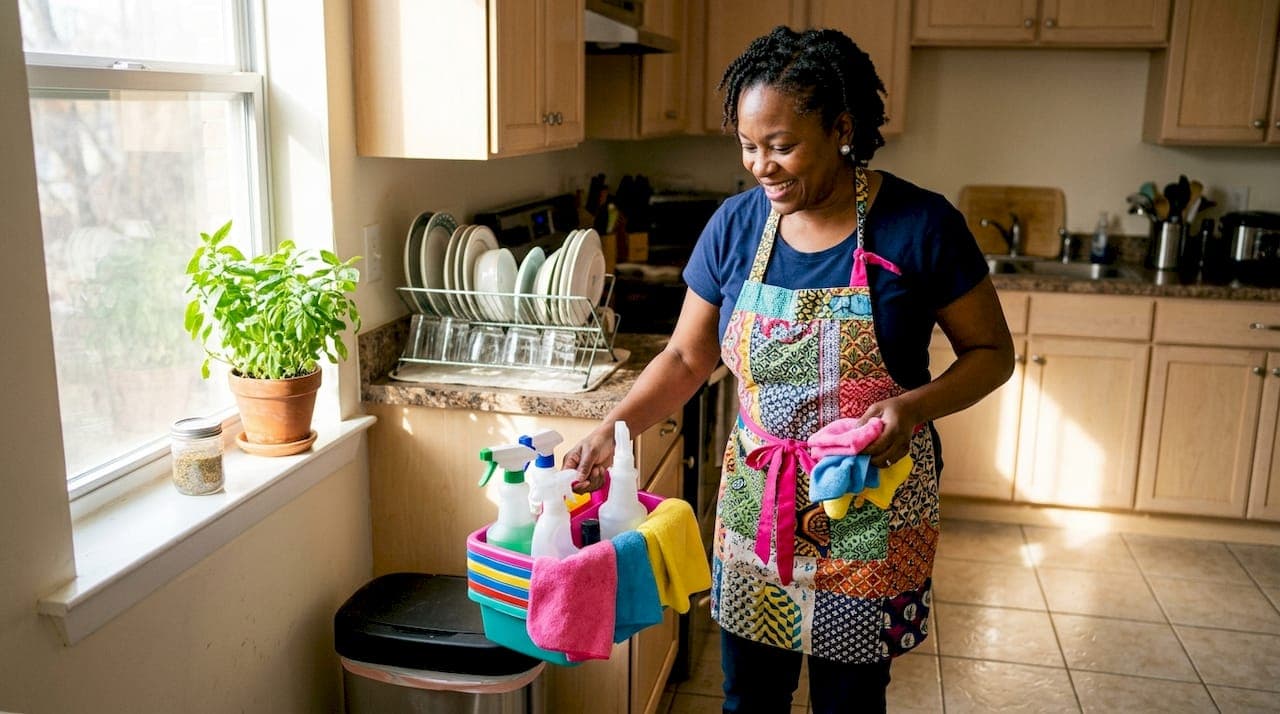
A whole house deep clean is defined as a systematic reset of every room in your home, completed within a structured two-day window. You can absolutely tackle whole house cleaning over a weekend when you prepare supplies in advance, sequence tasks by priority, and treat the process as a system rather than a willpower test. A deep clean for an average 3-bedroom, 2-bathroom home takes 6 to 8 hours for one person. Two people cut that time by about 50%. The difference between a productive weekend reset and an exhausting, unfinished mess comes down to one thing: a plan you actually follow.
What essential supplies do you need for a weekend deep clean?
The right tools make or break your weekend cleaning routine. Showing up to scrub a bathroom without the right products wastes time and kills momentum. Gathering all cleaning supplies beforehand in a portable caddy is the single most effective preparation habit. It keeps you moving from room to room without backtracking.
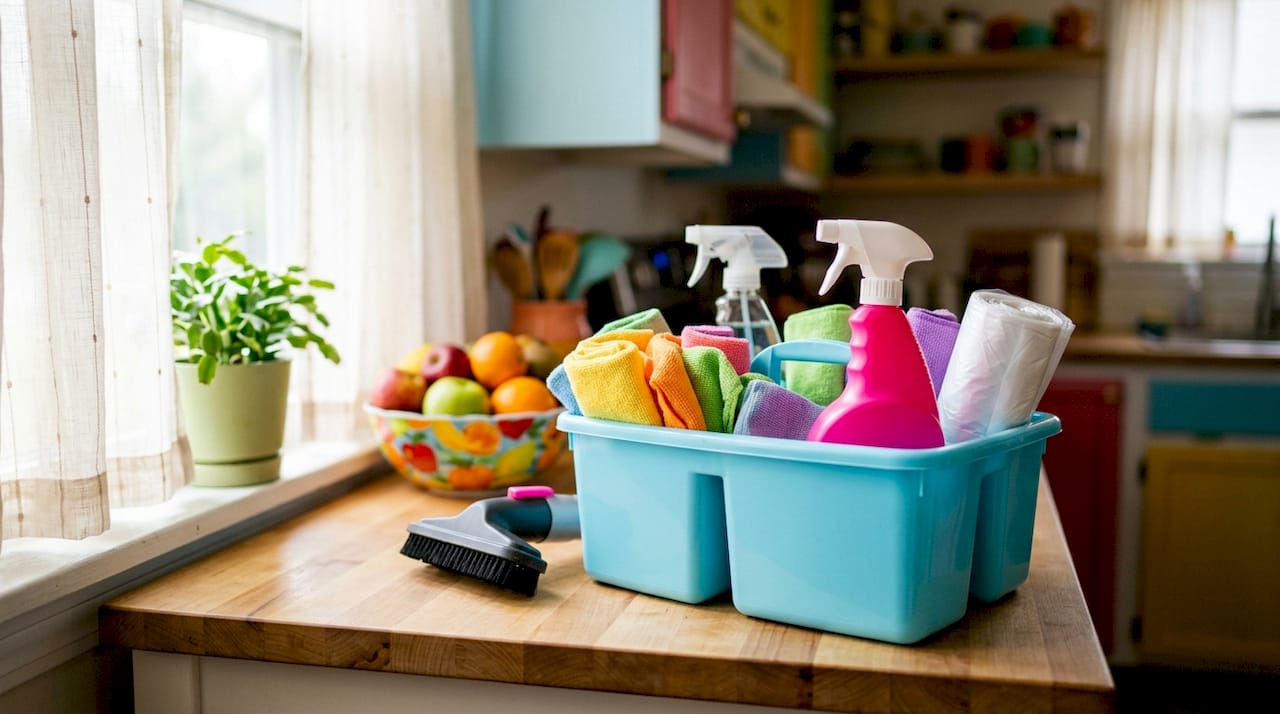
Your core kit should include microfiber cloths, an all-purpose cleaner, a glass cleaner, trash bags, a vacuum with attachments, a mop, a scrub brush, and a toilet brush. Microfiber cloths are especially worth noting: they trap dust and bacteria without spreading them, unlike paper towels. Stock at least six cloths so you can swap them between rooms without cross-contaminating surfaces.
Pro Tip: Choose multi-use products like a concentrated all-purpose cleaner that dilutes for different surfaces. One bottle handles counters, sinks, and appliances. This cuts down on the number of products you carry and reduces clutter in your caddy.
| Tool | Primary use | Time-saving benefit |
|---|---|---|
| Microfiber cloths | Dusting, wiping surfaces | Trap dust in one pass; no re-wiping |
| All-purpose cleaner | Counters, sinks, appliances | Replaces multiple single-use products |
| Vacuum with attachments | Floors, upholstery, baseboards | Covers multiple surfaces in one tool |
| Mop with washable pad | Hard floors | Reusable pad saves supply runs |
| Portable caddy | Supply transport | Keeps everything in reach room to room |
| Scrub brush | Grout, tile, tubs | Reaches tight spots faster than cloths |
Small habits around supplies also compound over time. Dr. Meagan Shepard notes that simple products like vinegar improve long-term odor and allergen control. Keeping a bottle of diluted white vinegar in your caddy gives you a natural deodorizer and surface cleaner at no extra cost.
How should you plan and prioritize tasks for a whole house weekend?
A specific, written task list beats a vague intention every time. Organizational expert Katrina Teeple confirms that specific, actionable task lists prevent decision fatigue and improve cleaning outcomes. "Clean the house" is not a task. "Scrub the bathroom tile and wipe down the vanity" is a task. The more specific your list, the faster you move.
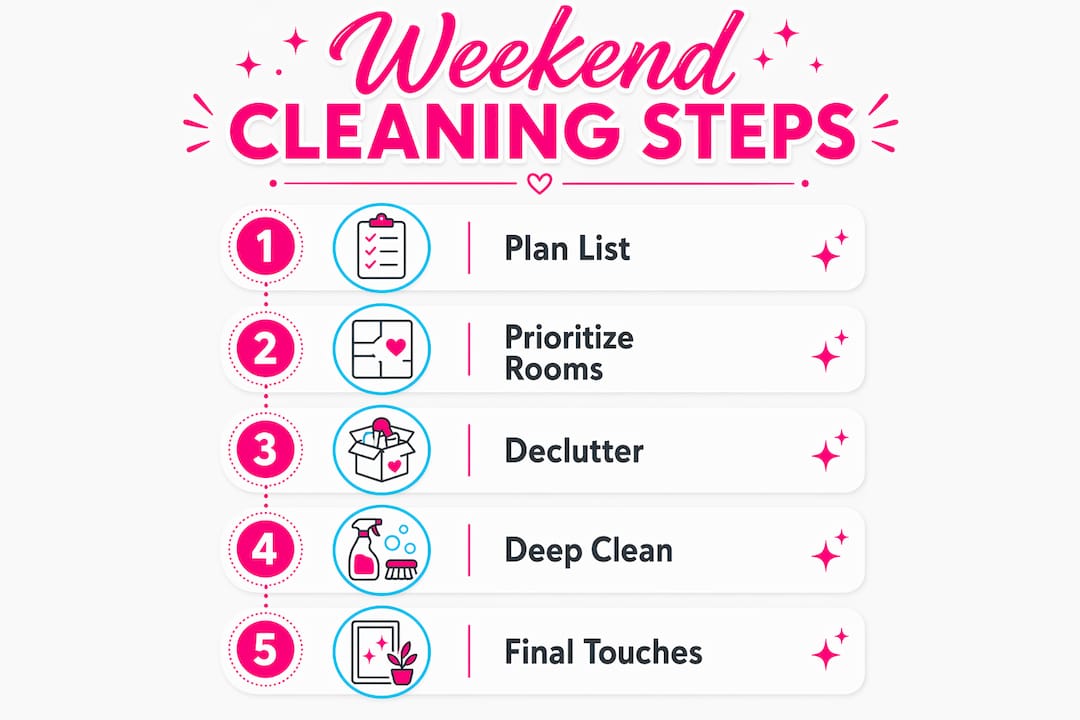
Prioritize by hygiene impact first. Kitchens and bathrooms affect smell and bacteria growth more than any other room. Hygiene-impacting areas like kitchens and bathrooms must sit at the top of your cleaning schedule for the weekend. Tackle these spaces when your energy is highest, typically Saturday morning.
Energy-expenditure sequencing means starting with high-impact, low-effort tasks to build momentum before moving to harder work. This approach prevents burnout before you reach the rooms that need the most attention. Think of it as warming up before a workout.
Here is a practical two-day cleaning schedule:
- Saturday morning (8:00 AM – 10:00 AM): Do a rapid purge pass through every room. Remove trash, relocate misplaced items, and set aside donation bags.
- Saturday mid-morning (10:00 AM – 1:00 PM): Deep clean the kitchen, including appliances, counters, sink, and floors.
- Saturday afternoon (1:00 PM – 4:00 PM): Clean all bathrooms top to bottom. Rest for 30 minutes after.
- Sunday morning (8:00 AM – 11:00 AM): Tackle bedrooms and living areas. Dust, vacuum, and wipe surfaces.
- Sunday afternoon (11:00 AM – 2:00 PM): Mop all hard floors, clean windows, and handle any remaining tasks.
Pro Tip: Before you start cleaning, walk through every room with a notepad and spend five minutes identifying clutter hotspots. Mark the three worst spots. Knowing where the chaos lives helps you allocate time before you pick up a single cloth.
Industry maintenance guidelines recommend scheduling whole-home resets every 2 to 4 weeks to maintain a healthy home environment. Building this rhythm means each weekend clean gets faster because you are maintaining rather than recovering.
What step-by-step approach resets your whole house in one weekend?
The most effective whole house cleaning checklist starts with decluttering, not scrubbing. Cleaning around clutter wastes time and produces poor results. A rapid purge pass takes 2 to 3 hours and delivers the highest visual impact of anything you do all weekend. Walk every room with three bags: trash, donate, and relocate.
Once surfaces are clear, follow a gravity-based room order. Working top to bottom in each room prevents re-cleaning surfaces. Dust ceiling fans and shelves first. Wipe counters and furniture next. Vacuum and mop floors last. Gravity does the work for you.
Here is the full execution sequence:
- Rapid purge pass (2–3 hours): Remove trash and clutter from every room before any cleaning begins.
- Kitchen deep clean (90+ minutes): Wipe appliances inside and out, scrub the sink, clean counters, and mop the floor. The kitchen is the most time-intensive area in a whole-home deep clean.
- Bathroom reset (45–60 minutes each): Scrub the toilet, tub, and sink. Wipe mirrors and restock supplies.
- Bedrooms (30–45 minutes each): Change linens, dust surfaces top to bottom, vacuum floors.
- Living areas (45–60 minutes): Dust furniture and electronics, fluff cushions, vacuum upholstery and floors.
- Hard floor finish (30–45 minutes): Mop all hard floors after vacuuming is complete in every room.
If two people are cleaning together, split the work by floor or by room type. One person handles all bathrooms while the other tackles the kitchen. This parallel approach cuts total time significantly. For a solo cleaner, the schedule above is realistic across two full days.
| Room | Estimated time (solo) | Priority level |
|---|---|---|
| Kitchen | 90+ minutes | High |
| Each bathroom | 45–60 minutes | High |
| Each bedroom | 30–45 minutes | Medium |
| Living areas | 45–60 minutes | Medium |
| Hard floors (all) | 30–45 minutes | Low |
A quick refresh differs from a full deep clean. A refresh covers visible surfaces, floors, and bathrooms in about 3 hours. A deep clean includes inside appliances, baseboards, grout, and behind furniture. Know which one you are doing before Saturday morning so your time estimates stay accurate.
What mistakes should you avoid during a weekend house cleaning?
The biggest mistake homeowners make is mixing organizing with cleaning. Avoid mixing organizing with cleaning; keep your purge pass separate and fast. When you stop to sort through a junk drawer mid-clean, you lose 20 minutes and your momentum. Purge first, clean second. Always.
The second mistake is trying to perfect every space in one weekend. Perfection is the enemy of progress here. Set a clear standard for "done" in each room and move on when you hit it. A clean bathroom with a wiped mirror and scrubbed toilet is done. You do not need to re-caulk the tub this weekend.
- Limit decision time during purge passes. Give yourself under 10 seconds per item. If you cannot decide quickly, place it in a "decide later" box and keep moving.
- Stick to your task list. Deviating from the schedule adds time and drains energy.
- Take scheduled breaks. A 15-minute break every 90 minutes maintains physical and mental stamina.
- Do not skip the purge pass. Cleaning around clutter produces poor results and takes longer.
- Avoid perfectionism in low-traffic areas. Spend your best energy on kitchens, bathrooms, and main living spaces.
Pro Tip: If you have a partner, roommate, or family member available, assign them one complete zone, such as all bathrooms or all bedrooms. Delegating a full zone, not just a single task, keeps both people in a productive flow without constant coordination.
Cleaning motivation for the weekend often fades by Sunday afternoon. Combat this by setting a visible finish line. Write your stopping time on a sticky note and put it on the fridge. Knowing the end is fixed makes it easier to push through the final stretch.
Key Takeaways
A structured, room-by-room plan with supplies ready in advance is the most reliable way to complete a whole house deep clean over a single weekend.
| Point | Details |
|---|---|
| Prep supplies first | Load a portable caddy before you start to avoid mid-task delays and lost momentum. |
| Prioritize by hygiene | Clean kitchens and bathrooms first when energy is highest; they affect health most. |
| Purge before you scrub | A 2–3 hour declutter pass delivers the highest visual impact of the entire weekend. |
| Work top to bottom | Clean from ceiling to floor in every room to avoid re-cleaning surfaces. |
| Schedule breaks | A 15-minute rest every 90 minutes sustains energy across both days. |
What I have learned from years of watching weekend cleans succeed and fail
Structure beats willpower every single time. I have seen motivated homeowners start Saturday with great energy and finish Sunday with half the house done because they had no plan. I have also seen people who dreaded the whole process finish by noon on Sunday because they followed a written schedule and stuck to it.
The insight that changed how I think about weekend cleaning is this: decluttering visible clutter has more mental impact than deep organizing hidden storage. You do not need to reorganize your linen closet to feel like your home is reset. Clear the counters, clean the floors, and scrub the bathrooms. Your brain registers those visible wins immediately, and that feeling carries you through the rest of the work.
Realistic goals matter more than ambitious ones. Commit to a standard you can hit, not the Pinterest-perfect version of your home. Progress you can see by Sunday evening is worth more than a half-finished deep clean that leaves you exhausted and discouraged.
The shortcut I rely on most from professional cleaning practice: always clean the kitchen last on Saturday, not first. Get the purge pass and the bathrooms done first. By the time you hit the kitchen, you are warmed up, your caddy is stocked, and you know exactly how much time you have left. The kitchen rewards focused effort more than any other room in the house.
— Tanna
When a professional clean makes more sense than a DIY weekend
Sometimes the weekend is short, the to-do list is long, and the house needs more than a refresh. That is exactly where Candiglitzllc steps in.

Candiglitzllc delivers premium residential deep cleaning across the greater Atlanta area, including Sugar Hill and surrounding communities. Whether you need a one-time whole house reset, a recurring maintenance clean, or a move-in/move-out deep clean, the Candiglitzllc team brings professional-grade products, proven systems, and genuine care to every space. For homeowners managing rental properties, Candiglitzllc also offers property management cleaning services built around scheduled resets that keep your home in top condition without the weekend effort. Book a consultation and let us handle the hard work so you can spend your weekend doing something you actually enjoy.
FAQ
How long does a whole house deep clean take for one person?
A deep clean for an average 3-bedroom, 2-bathroom home takes 6 to 8 hours for one person. Splitting the work with a second person cuts that time by roughly 50%.
What should I clean first when doing a whole house weekend clean?
Clean kitchens and bathrooms first. These areas affect bacteria growth and odor most directly, so they deliver the highest hygiene impact when tackled at the start of your weekend.
How often should I do a full weekend house reset?
Industry guidelines recommend a full home reset every 2 to 4 weeks to maintain a healthy home environment. Regular resets make each session faster and less physically demanding.
Should I declutter before I start cleaning?
Yes. Complete a rapid purge pass before any scrubbing begins. Cleaning around clutter wastes time and produces poor results. The purge pass takes 2 to 3 hours and creates the biggest visible improvement of the entire weekend.
What is the difference between a quick refresh and a deep clean?
A quick refresh covers visible surfaces, floors, and bathrooms in roughly 3 hours. A deep clean includes inside appliances, grout, baseboards, and behind furniture, and takes 6 to 8 hours for an average home.