
Short-term rental cleaning is defined as the specialized turnover process of preparing a rental property between guest stays to meet hotel-level hygiene standards, restock essentials, and deliver a flawless first impression. This practice goes far beyond routine housekeeping. It includes sanitization, linen changes, damage inspection, and supply restocking, all completed within a tight window before the next guest arrives. Cleanliness is the most-reviewed feature on booking platforms, directly shaping guest ratings and Superhost status. For hosts who want strong reviews and consistent bookings, mastering this process is not optional.
What tasks and standards define short-term rental cleaning?
Effective short-term rental cleaning explained in practical terms means working through every room with a documented checklist and hotel-grade expectations. The goal is not just visible cleanliness. Every surface, fixture, and supply point must meet the standard a paying guest expects on arrival.
Room-by-room priorities
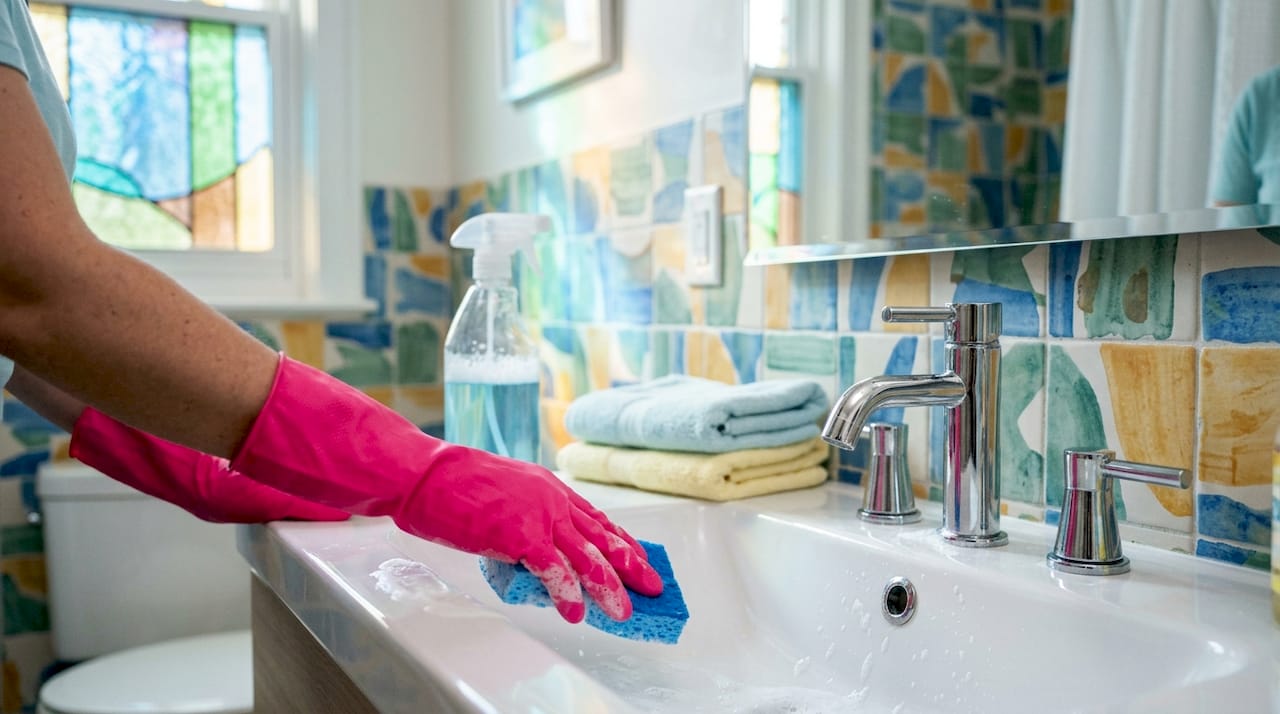
Bathrooms and kitchens demand the most attention. Bathrooms carry the highest risk of guest complaints, so every turnover should include scrubbing the toilet, sink, tub, and shower, plus wiping mirrors and replacing toiletries. Proactive grout brushing at each turnover prevents deep staining and eliminates one of the most common guest complaints. Kitchens require wiping all appliance surfaces, checking inside the microwave and refrigerator, and confirming that cookware is clean and properly stored.
Bedrooms and living areas focus on linen changes, dusting, and vacuuming. Every bed must be freshly made with crisp linens. Throw pillows, blankets, and decorative items should be straightened and staged for photography-ready presentation.
Core checklist items every host needs
- ✅ Strip and replace all bed linens and pillowcases
- ✅ Sanitize all high-touch surfaces: light switches, door handles, remote controls, and countertops
- ✅ Restock toiletries, paper products, coffee supplies, and kitchen essentials
- ✅ Inspect for damage, missing items, or maintenance issues
- ✅ Empty all trash cans and replace liners
- ✅ Sweep, mop, and vacuum all floors
- ✅ Check and clean all appliances inside and out
- ✅ Stage the property for guest arrival with a welcoming presentation
Pro Tip: Build a printed or digital checklist specific to your property and require sign-off after each turnover. Consistency in your cleaning checklist for rentals is what separates five-star hosts from average ones.
How do hosts optimize cleaning efficiency within tight turnover windows?
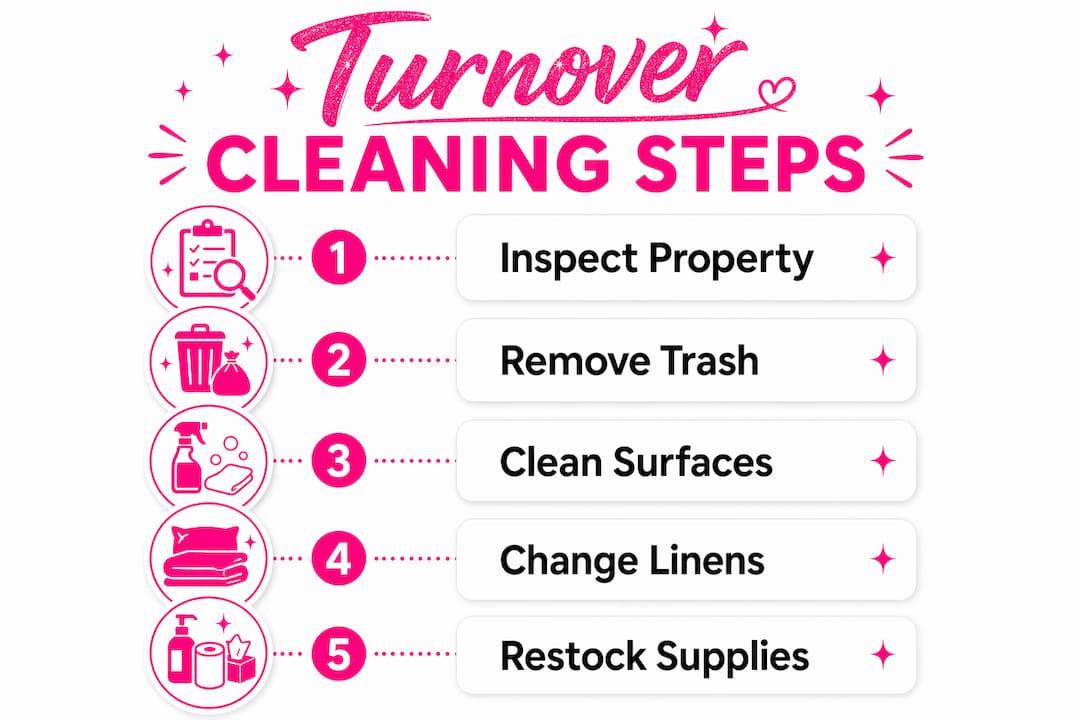
Turnover timelines are one of the hardest parts of running a short-term rental. Most platforms allow a 3–4 hour window between checkout and check-in. That window must cover cleaning, laundry, restocking, and staging. Wasted time anywhere in that sequence creates a ripple effect that can delay a guest's arrival.
Five steps to a faster, tighter turnover
- Start laundry first. Strip all beds immediately upon entering the property and start the wash cycle before cleaning any other room. Laundry is the longest task and runs in the background while you clean.
- Use three linen sets per bed. Maintaining three full linen sets per bed eliminates washing bottlenecks. One set is on the bed, one is in the wash, and one is clean and ready. This enables immediate bed remaking without waiting on laundry.
- Organize supplies with color-coded caddies. Color-coded microfiber cloth caddies save 15–20 minutes per turnover and prevent cross-contamination. Use red for bathrooms, yellow for kitchens, and blue for general areas.
- Sequence rooms by priority. Clean bathrooms and kitchens first since they take the longest. Move to bedrooms and living areas while laundry finishes. Stage last.
- Connect cleaning triggers to your booking calendar. Automated cleaning triggers linked to booking calendars reduce missed turnovers and remove the need for manual scheduling coordination.
Pro Tip: Walk the property in a single loop before leaving to catch anything missed. A two-minute final walkthrough prevents the one-star review that costs you ten bookings.
What are the typical costs and pricing strategies for rental cleaning services?
Cleaning fees are both a cost center and a revenue tool. Understanding the difference between what you charge guests and what you actually pay for cleaning is the foundation of a profitable pricing strategy.
Turnover cleaning costs range nationally from $75 to $250, representing roughly 10–18% of monthly rental revenue. Last-minute cleaning premiums can reach up to 50% above standard rates. That premium reflects the real scheduling pressure cleaners face when a same-day turnover is requested.
Average cleaning fees on Airbnb average $188, but actual cleaning costs are often lower. The difference between the fee charged to guests and the true cost funds operational margin for the host. Hosts who set fees too low to attract bookings often erode that margin entirely.
| Property size | Typical cleaning cost | Suggested guest fee |
|---|---|---|
| Studio or 1-bedroom | $75–$110 | $100–$140 |
| 2–3 bedrooms | $110–$175 | $150–$200 |
| 4+ bedrooms or luxury | $175–$250+ | $200–$300+ |
| Same-day or last-minute | Standard rate + up to 50% | Pass through to guest |
Property size, amenity count, and turnaround speed all affect where your costs land within these ranges. A property with a hot tub, outdoor kitchen, or multiple bathrooms will always cost more to turn over than a simple studio. Build that reality into your fee structure from the start.
What operational models support scalable rental cleaning?
Scaling a rental portfolio without a reliable cleaning operation is one of the fastest ways to destroy your review score. The right operational model depends on how many units you manage and how much direct control you want over quality.
Small rental portfolios under 50 units benefit most from professional cleaning contracts. Mid-sized portfolios typically use hybrid models that balance in-house staff with contracted cleaners for peak periods. Both approaches work, but they require different management systems.
Key practices that support any model:
- Document your SOPs. Every cleaner, whether in-house or contracted, should follow the same written standard operating procedures. Verbal instructions create inconsistency.
- Use performance incentives. Offering merit-based raises after five successful cleanings improves cleaner retention and scheduling reliability. Reliable cleaners are worth more than cheap ones.
- Manage inventory centrally. Track restocking supplies across all units in one place. Running out of toilet paper or coffee pods at a property is a guest experience failure, not just a supply issue.
- Communicate in real time. Use a shared messaging channel or property management platform so cleaners can flag damage, missing items, or maintenance needs immediately after each turnover.
Candiglitzllc's property management cleaning services are built around exactly this kind of structured, scalable approach, with consistent quality across every unit in your portfolio.
How does short-term rental cleaning differ from regular residential cleaning?
Short-term rental cleaning and regular residential cleaning share the same tools but operate under completely different rules. The pace, standards, and stakes are not comparable.
Short-term rentals require different SOPs from regular home cleaning because of high turnover frequency, immediate guest feedback, and the need for inventory management at every visit. A residential cleaner working on a weekly schedule has days to address any missed spots. A vacation rental cleaner has hours before a guest walks through the door and posts a public review.
| Factor | Short-term rental cleaning | Regular residential cleaning |
|---|---|---|
| Timeline | 3–4 hours between guests | Flexible, no hard deadline |
| Feedback loop | Public guest review within 24 hours | No formal feedback mechanism |
| Restocking | Required at every turnover | Not applicable |
| Damage inspection | Mandatory each visit | Rarely included |
| Hygiene standard | Hotel-level sanitization | Standard household cleaning |
| SOP requirement | Strict, documented protocols | Informal or owner-directed |
The immediate feedback loop is the sharpest distinction. A guest who finds a hair in the shower or a sticky countertop will say so publicly within hours. That review affects your ranking, your bookings, and your income. Regular residential cleaning simply does not carry that level of consequence.
Key Takeaways
Effective short-term rental cleaning is the single most direct lever hosts control for protecting their guest ratings, booking volume, and revenue margin.
| Point | Details |
|---|---|
| Cleanliness drives bookings | Cleanliness is the most-reviewed feature on booking platforms and directly affects host status. |
| Three linen sets per bed | Keeping three sets per bed eliminates laundry delays and speeds up every turnover. |
| Color-coded caddies save time | Using color-coded microfiber caddies saves 15–20 minutes per turnover and prevents cross-contamination. |
| Fee vs. cost distinction matters | Average Airbnb cleaning fees exceed actual cleaning costs, and the gap funds your operational margin. |
| SOPs separate pros from amateurs | Documented cleaning procedures create consistency across every turnover, regardless of who cleans. |
What I've learned after years of watching hosts get this wrong
Hosts treat cleaning like a cost to minimize. That is the wrong frame entirely. Cleaning is the product your guest actually receives. Everything else, the photos, the listing copy, the amenities, gets them to book. The cleanliness of the space determines whether they come back and what they tell others.
The hosts I've seen struggle most are the ones who hire the cheapest cleaner they can find and then wonder why their reviews plateau at 4.2 stars. Reliable, skilled cleaners who follow a real checklist are worth paying for. The math is simple: one bad review can cost you multiple future bookings. A cleaner who charges $30 more per turnover but never misses a spot is the better investment every time.
The other mistake I see constantly is no documentation. Hosts give verbal instructions, assume the cleaner remembers everything, and then blame the cleaner when something goes wrong. Write your SOPs down. Include photos of how each room should look on completion. Make the standard visible and repeatable.
Finally, build your cleaner relationships like you build any business relationship. Communicate clearly, pay fairly, and recognize good work. Performance-based incentives are not just a retention tactic. They signal that you value the work, and that changes how people show up.
— Tanna
How Candiglitzllc supports your hosting success
Candiglitzllc brings precision, care, and genuine hospitality expertise to every short-term rental turnover we handle in the greater Atlanta area.
Our Airbnb turnover cleaning services cover everything from sanitization and linen management to restocking and guest-ready staging. We work within your booking calendar, follow documented SOPs for every property, and flag damage or maintenance issues after each visit. Whether you manage one unit or a growing portfolio, we build a cleaning program around your schedule and your standards. Reach out to Candiglitzllc to get a quote and experience what it feels like to have a cleaning partner who treats your property like their own.
FAQ
What is short-term rental cleaning?
Short-term rental cleaning is the turnover process of sanitizing, restocking, and staging a rental property between guest stays. It follows hotel-level hygiene standards and includes linen changes, damage inspection, and supply restocking.
How long does a short-term rental turnover take?
Most turnovers are completed within 3–4 hours, depending on property size and amenity count. Larger properties with multiple bathrooms or outdoor amenities require more time and typically cost more to clean.
What should a rental cleaning checklist include?
A complete cleaning checklist for rentals covers linen changes, bathroom and kitchen sanitization, high-touch surface disinfection, trash removal, floor cleaning, appliance checks, and full supply restocking before each guest arrives.
How much does short-term rental cleaning cost?
Turnover cleaning costs range from $75 to $250 nationally, with same-day or last-minute requests adding up to 50% in premiums. Property size and amenities are the primary cost drivers.
Why does short-term rental cleaning differ from regular house cleaning?
Short-term rental cleaning requires strict SOPs, inventory restocking, and damage inspection at every visit, all within a compressed timeline. Regular residential cleaning operates on a flexible schedule without the immediate public feedback loop that guest reviews create.