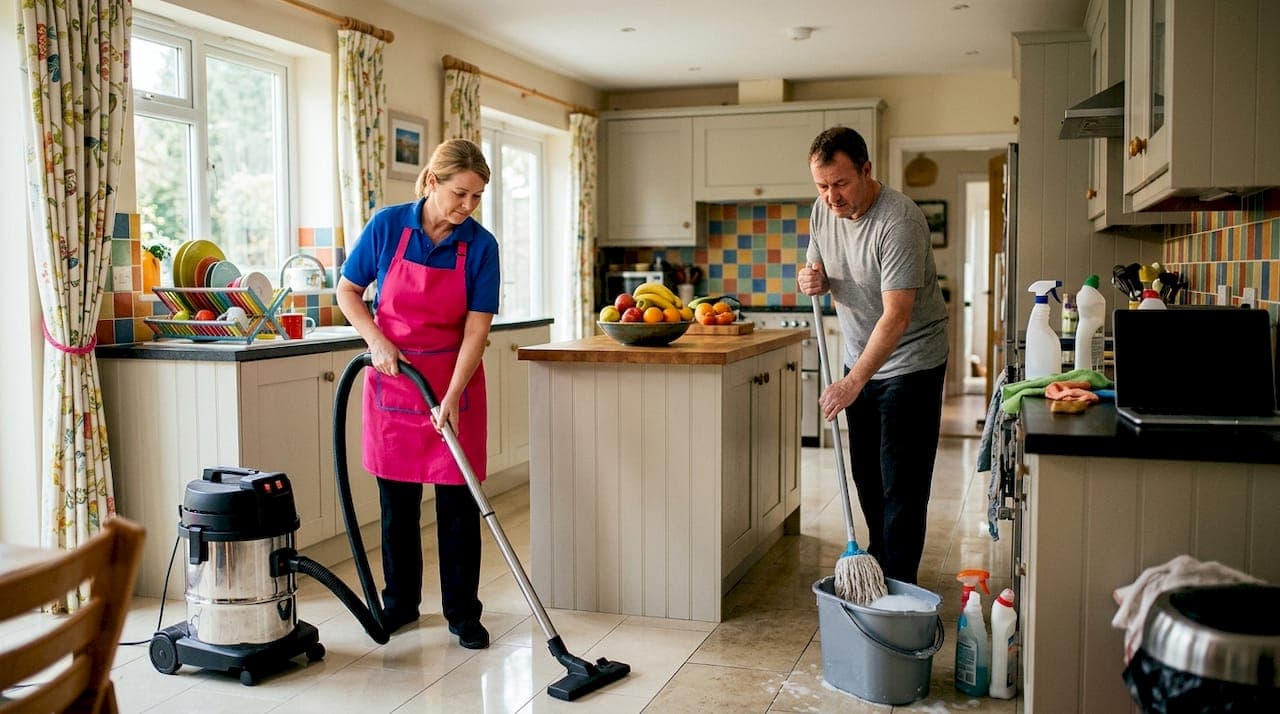
Professional cleaning is defined as a paid service where trained specialists use commercial-grade equipment and systematic workflows to clean residential or commercial spaces to a higher standard than typical home methods. The professional cleaning vs DIY comparison comes down to three factors: time, cost, and results. For most homeowners and renters, the honest answer is that neither option wins in every situation. The right choice depends on your home size, schedule, budget, and health needs. This guide breaks down each factor with real numbers so you can decide with confidence.
1. How much time does each option actually take?
Time is the most underestimated factor in the cleaning services vs DIY debate. DIY deep cleaning a 2,000–2,500 sq ft home takes 5–8 hours per session. A professional team completes the same job in 2–3 hours. That gap adds up fast.
The average American spends over 400 hours annually on DIY cleaning tasks. That is the equivalent of ten full work weeks every year spent scrubbing, vacuuming, and mopping. For busy professionals, parents, or anyone with a packed schedule, that number alone makes the case for hiring help.
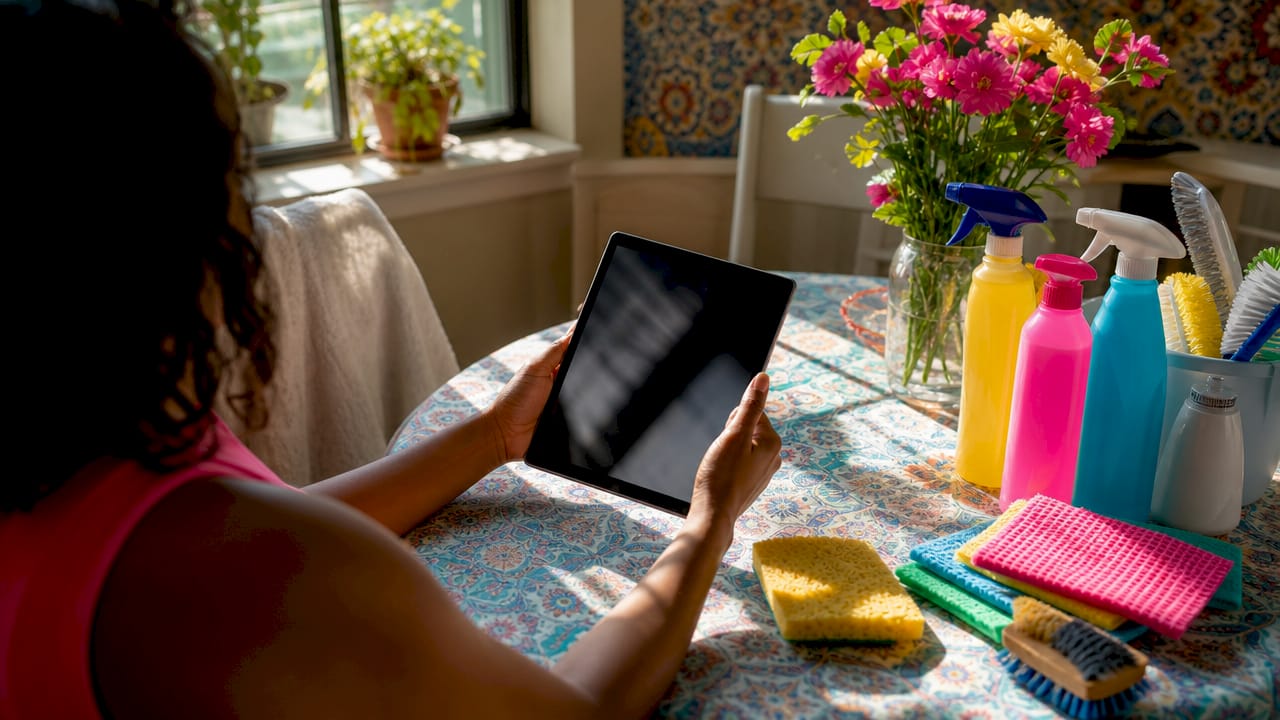
Physical effort matters too. A full DIY deep clean requires sustained bending, scrubbing, and lifting. That physical toll is real, especially for older homeowners or anyone managing a health condition. Professional cleaners are trained and conditioned for this work, so they move faster and with less fatigue.
Pro Tip: If you choose DIY, break the deep clean into two sessions over a weekend rather than one marathon day. You will clean more thoroughly and avoid burnout. For a full plan, check out how to tackle whole house cleaning in a weekend.
Key time differences at a glance:
- DIY deep clean: 5–8 hours per session
- Professional deep clean: 2–3 hours per session
- Annual DIY time investment: 400+ hours
- Opportunity cost: every hour cleaning is an hour not working, resting, or spending time with family
2. What does each option actually cost?
Cost is where most homeowners get surprised. DIY feels free, but it is not. Annual DIY cleaning costs include $200–$400 in supplies and $300–$800 in equipment replacement every 3–5 years. Add your time at a conservative $30 per hour, and the numbers shift dramatically.
DIY cleaning time valued at $30 per hour can exceed $7,800 in lost opportunity annually. That figure reframes the entire conversation. Cleaning yourself is not free. It costs you time that has real monetary value.
Professional cleaning pricing is more predictable. Standard visits run $100–$250, while deep cleaning ranges from $150–$600 or more depending on home size and frequency. Many services offer recurring discounts that bring the per-visit cost down significantly.
Pro Tip: Book recurring professional cleaning rather than one-time visits. Most providers offer 10–20% discounts for weekly or biweekly schedules, which lowers your annual cost while keeping your home consistently clean.
| Cost Factor | DIY Cleaning | Professional Cleaning |
|---|---|---|
| Annual supplies | $200–$400 | Included in service fee |
| Equipment replacement | $300–$800 every 3–5 years | Not applicable |
| Time cost at $30/hour | $7,800+ annually | Zero additional time cost |
| Per-session cost | Appears free | $100–$600 depending on scope |
| Hidden risks | Surface damage, product waste | Covered by professional insurance |
The table makes one thing clear: DIY is rarely as cheap as it looks. For homeowners who value their time, professional cleaning often costs less in total when you count every dollar honestly.
3. What tools and techniques separate professionals from DIY?
Professional cleaners use equipment that most homeowners simply cannot access. Commercial-grade HEPA vacuums and specialty degreasers remove embedded allergens and buildup that standard consumer vacuums leave behind. That difference is not cosmetic. It affects air quality and long-term surface health.
Systematic checklists are another professional advantage. Trained cleaners follow room-by-room workflows that cover every surface in a set sequence. This prevents the "I forgot the baseboards" problem that plagues most DIY sessions. Consistency is built into the process, not left to memory.
Improper chemicals and techniques are the biggest DIY risk most homeowners overlook. Using the wrong cleaner on natural stone, grout, or hardwood can cause permanent etching, discoloration, or warping. Professionals carry product knowledge and insurance coverage, so if something goes wrong, you are protected. With DIY, the repair bill lands entirely on you.
Key quality differences between DIY and professional cleaning:
- Equipment: Commercial HEPA vacuums vs. consumer-grade models
- Products: pH-balanced, material-specific solutions vs. general-purpose sprays
- Technique: Systematic checklists vs. memory-based cleaning
- Allergen removal: Deep extraction of dust mites, pet dander, and mold spores
- Risk: Professional insurance coverage vs. full homeowner liability for DIY damage
Professional cleaning extends the lifespan of surfaces like natural stone and grout by using pH-balanced, material-specific products. That protection translates directly into fewer repairs and lower long-term home maintenance costs.
4. When should you choose professional cleaning vs DIY?
The right answer depends on your specific situation. Not every home or lifestyle calls for the same approach. Here is how to think through the decision based on real-life factors.
-
Small homes under 1,000 sq ft. DIY is genuinely manageable for studios and one-bedroom apartments with light traffic. A weekly 45-minute routine keeps these spaces clean without professional help.
-
Larger homes over 2,000 sq ft. DIY deep cleaning becomes a serious time commitment. Professional services deliver better results in less time, and the cost per square foot is more justifiable at this scale.
-
Renters preparing for move-out. A professional move-out clean protects your security deposit. Landlords inspect at a higher standard than daily upkeep, and professionals know exactly what passes inspection.
-
Busy professionals and dual-income households. When your weekends are already packed, spending 6 hours cleaning is a real sacrifice. Professional cleaning returns that time to you.
-
Health-sensitive households. Families with asthma, allergies, or young children benefit most from professional allergen removal. HEPA vacuuming and deep extraction reduce triggers that standard cleaning misses.
-
The hybrid approach. The industry gold standard combines daily DIY tidying with scheduled professional deep cleans. You handle surface tasks daily, and professionals handle the heavy work monthly or quarterly. This model balances cost, time, and cleanliness for most households.
-
Airbnb and short-term rental hosts. Turnover cleaning between guests requires speed, consistency, and presentation quality that DIY rarely achieves under time pressure. Professional turnover services handle cleaning, laundry, restocking, and staging in one visit.
The hybrid cleaning model works because it plays to the strengths of both approaches. DIY handles the quick, frequent tasks. Professionals handle the deep, technical work that requires specialized tools and expertise.
Key Takeaways
The most cost-effective cleaning strategy for most homeowners combines routine DIY upkeep with scheduled professional deep cleaning, because neither approach alone delivers the best balance of time, cost, and results.
| Point | Details |
|---|---|
| Time savings are significant | Professionals clean a 2,000+ sq ft home in 2–3 hours vs. 5–8 hours for DIY. |
| DIY costs more than it appears | Supplies, equipment, and opportunity cost can exceed $7,800 annually. |
| Professional tools outperform consumer gear | HEPA vacuums and commercial products remove allergens and protect surfaces better. |
| The hybrid model is the practical winner | Daily DIY upkeep plus monthly or quarterly professional deep cleans maximizes value. |
| Situation determines the best choice | Home size, health needs, and schedule all shape which approach fits your life. |
What I have learned about cleaning smarter, not harder
I have seen a lot of homes, and the pattern is consistent: the homeowners who are happiest with their living spaces are not the ones who clean the most. They are the ones who clean strategically.
Most people treat the professional vs. DIY question as an either/or choice. It is not. The real question is: what tasks deserve your time, and what tasks deserve an expert? Wiping down counters after dinner? That is yours. Scrubbing grout, deep-cleaning upholstery, and sanitizing baseboards? That is where professional expertise pays for itself.
What surprises people most is the health angle. A clean-looking home is not always a healthy one. Dust mites, mold spores, and pet dander accumulate in places a standard mop and vacuum never reach. Regular professional maintenance prevents premature wear of home finishes and reduces the allergen load that affects your family's wellbeing every single day.
My honest advice: start with a professional deep clean to reset your home to a true baseline. Then maintain that standard with consistent daily habits. You will spend less time cleaning overall, and your home will stay cleaner longer. That is not a sales pitch. That is just what the data shows.
— Tanna
Candiglitzllc brings the "Glitz" to your home
A clean space is a reflection of respect, for yourself, your family, and the people you welcome through your door. At Candiglitzllc, we deliver that standard every single time.
We serve homeowners and renters across the greater Atlanta area with routine cleaning, deep cleaning, move-in/move-out services, and full property management cleaning plans built for consistency and trust. Whether you need a one-time reset or a recurring schedule that keeps your home sparkling year-round, we have a plan that fits. Our professional cleaning services are backed by trained specialists, commercial-grade equipment, and a genuine commitment to excellence. Book with Candiglitzllc and experience what a truly "Glitzed" home feels like.
FAQ
How long does a professional deep clean take?
A professional team typically completes a deep clean of a 2,000–2,500 sq ft home in 2–3 hours. DIY deep cleaning of the same space takes 5–8 hours.
Is DIY cleaning actually cheaper than hiring a professional?
Not always. When you factor in annual supply costs of $200–$400, equipment replacement, and the opportunity cost of your time at $30 or more per hour, DIY can cost more than a recurring professional service.
What is the hybrid cleaning approach?
The hybrid approach combines daily DIY tidying for routine tasks with scheduled professional deep cleans monthly or quarterly. It is the most practical model for most households because it balances cost, time, and cleanliness.
When should renters hire a professional cleaner?
Renters benefit most from professional cleaning before move-out, when landlord inspection standards are highest. A professional clean protects your security deposit and meets the detailed standards most DIY efforts miss.
Does professional cleaning actually improve home air quality?
Yes. Professional cleaners use HEPA vacuums and commercial extraction tools that remove embedded allergens, dust mites, and mold spores that standard consumer equipment leaves behind, directly improving indoor air quality.